Practical Embroidery Review: Bold and Easy Life in Jar Designs
As a designer who regularly translates digital files into physical, stitched products, my first question about any new design asset is always the same: what will this actually look like when the thread hits the fabric? Today, I’m considering the Bold and Easy Life in Jar Coloring Pages from that very practical standpoint. This isn't about the file as a digital graphic; it's about its potential as an embroidery design for real projects.
The Immediate Mood and Visual Character
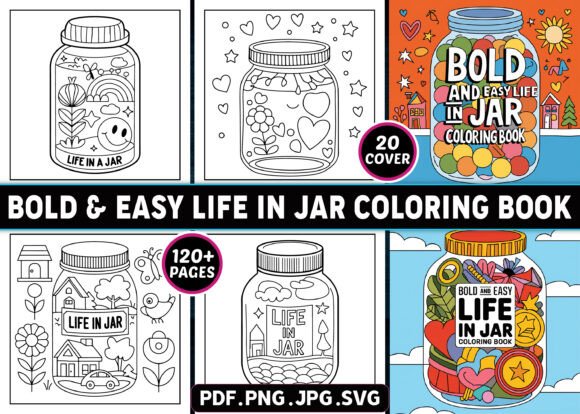
Opening these files, the impression is clear: whimsical, contained, and wonderfully graphic. The "life in a jar" theme—with plants, little scenes, and cozy objects—carries a gentle, storytelling vibe. It feels nostalgic and quietly joyful. The "bold and easy" descriptor in the title is apt; the outlines are strong and clean, with a level of detail that is engaging but not overwhelmingly intricate. This creates a distinct visual personality that is neither too childish nor too austere—it sits perfectly in that sweet spot for handmade gifts and personal expression.
For an embroidery designer, this translates to a design with excellent stitching clarity. Those bold lines are a gift; they provide clear paths for satin stitch borders or confident running stitch outlines. The elements within each jar are separated enough that you won’t face a nightmare of dense, overlapping fill stitches. This is a design set that respects the medium of embroidery.
The Natural Fit for Embroidery Projects
Let’s walk through a real scenario. Imagine you’re preparing a custom embroidered tote bag for a client who loves gardening. You select one of the jar designs with a tiny succulent inside. The graphic, contained nature of the artwork means it sits beautifully as a focal point on the bag’s front panel. Because the design isn’t overly sprawling, you can hoop it cleanly, even on a bag’s sometimes-unstable fabric. The finished piece feels intentional—a complete, charming scene rather than a fragment of a larger image.
This logic extends to countless products. On a baby’s blanket or nursery decor, these jars offer a gentle, imaginative motif. For a kitchen towel or apron, a jar with herbs or kitchen tools becomes a witty, personalized accent. Stitched onto a pillow cover, it creates a cozy, homey feel. As a embroidered patch, the contained shape makes it ideal for application onto jackets or bags. The theme is universally pleasant, making these designs highly giftable and easy to sell in a small shop or Etsy listing.
Where These Designs Elevate Your Product
Using a design with such clear character directly impacts your finished product’s value. A customer sees a coherent, well-executed idea. That builds customer trust—they recognize the thoughtfulness behind the choice. For your brand consistency, if your shop carries a "quietly joyful" aesthetic, these designs reinforce it perfectly. The handmade presentation feels professional because the design itself has a professional graphic base. It engages buyers because it tells a small, complete story they can connect with.
Performance in Real Stitching Situations
Now, the practical realities. The "bold" lines are a major advantage on textured fabrics like sweatshirt fleece or canvas tote bags, where finer details can get lost. The overall shape is generally hoop-friendly for moderate sizes. However, pay close attention to the small details inside the jars—tiny leaves, little dots, or miniature objects. On a very small hoop size, these might require careful thread choice and stabilizer use to remain crisp.
Dark fabric is a consideration. The designs, as coloring pages, are likely single-color outlines. This means your thread color choice is paramount. A light thread on a dark garment will make the design pop beautifully, but you must ensure the contrast is high. Always test on scrap fabric first. Similarly, on stretchy fabric like t-shirts, use a proper stabilizer to prevent the clean lines from distorting.
For curved surfaces like caps, the jar’s rounded top is a natural fit, but be mindful of the design’s overall height to ensure it fits the cap’s limited flat area. Avoid using designs with extremely fine internal details on items that need frequent washing, like baby clothes, unless you use durable threads and secure stitching techniques.
Commercial and Personal Use Considerations
Since the product is categorized under Graphics and described for book interiors, its primary use case is digital. For embroidery designers and craft business owners, this means you must confirm licensing before selling finished embroidered items or using the designs as commercial embroidery assets. The description doesn’t specify embroidery licensing, so that is a crucial step. If licensed for commercial use, these designs could become excellent, unique offerings for your custom apparel or small shop product line.
Designer Notes for a Smooth Project
Before you hoop your fabric, here’s a quick checklist born from experience:
- Test on scrap fabric first, especially with the fabric type you plan to use for the final product.
- Check thread color contrast against your background fabric. These designs rely on outline clarity.
- Review stitch density settings in your machine embroidery file. You want the fills (if you add them) to be balanced, not overly dense.
- Inspect the smallest details in your chosen jar design. Will they stitch out clearly at your intended size?
- Test the design in black and white mockups to see its form without color distraction. This helps judge its graphic strength.
- Compare how it would look on both light and dark fabric backgrounds—often, a design sings on one but fades on the other.
- Use a proper stabilizer for your specific fabric to maintain those clean "bold and easy" lines.
- Finally, always ensure the embroidery file you create from this graphic is sized appropriately for your hoop size and machine compatibility.
The Final Stitched Impression
When you commit a Bold and Easy Life in Jar design to thread, you’re translating a friendly digital graphic into a tactile, warm finished product. The result should feel like a captured moment—a little world stitched into existence. For your client, customer, or gift recipient, that carries a special kind of charm. As a designer, that’s the real test: does the design support that transformation? In this case, the strong graphic foundation, contained composition, and gentle theme suggest it absolutely can. It’s a set that invites embroidery, promising projects that are as enjoyable to make as they are to receive.